
Navigating Global Supply Chain Shocks in the Oil and Gas Industry
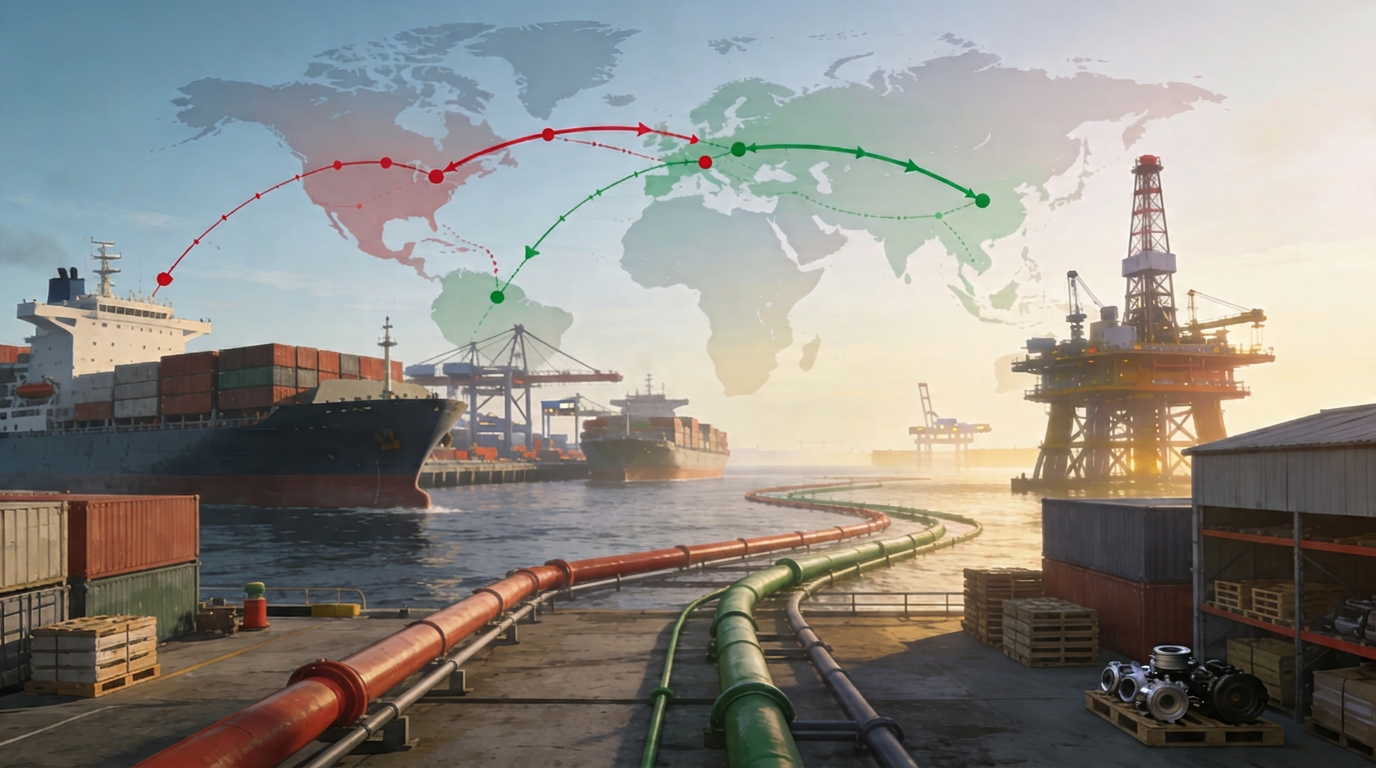
Global Supply Chain Challenges in the Oil and Gas Industry
1. Geopolitical and macroeconomic volatility
Oil and gas supply chains are highly exposed to trade restrictions, sanctions, regional conflicts, and shifting energy policies that can suddenly block routes or curtail production. Sustained inflation and currency volatility have also widened procurement costs, especially for long‑lead equipment and critical chemicals used in drilling and processing.
At the corporate level, these macro risks translate into unpredictable lead times, project reshuffling, and difficulty locking in stable CAPEX and OPEX budgets, particularly for deep‑water, frontier, or high‑risk regions
2. Logistics and infrastructure constraints
The industry relies on complex, multimodal logistics—pipelines, ports, tankers, and specialized vessels—to move chemicals, equipment, and finished products across continents. Port congestion, limited vessel capacity, and under‑invested storage or pipeline infrastructure regularly create bottlenecks that delay project milestones and force costly work‑arounds.
Remote and offshore operations add further pressure, as ‘just in time’ delivery to rigs or marginal fields often depends on a small pool of qualified vessels and aviation assets, leaving little margin for error when weather, strikes, or regulatory changes intervene
3. Labor and skills shortages
Supply‑chain delays are frequently compounded by labour shortages in manufacturing, logistics, and marine operations, driven by an aging workforce, migration restrictions, and competition from other sectors. Work‑stoppage events and strikes for higher wages have further tightened availability of critical personnel and equipment, pushing more work into emergency or “catch‑up” modes that raise costs and safety risk.
4. Supplier concentration and single‑source dependencies
Many projects still depend heavily on a small number of tier‑1 equipment suppliers or regional chemical‑manufacturing hubs, which magnifies the impact of any port closure, factory outage, or regulatory change. The knock‑on exposure to tier‑2 and tier‑3 suppliers—often geographically concentrated or dependent on rare‑earth inputs—can be hard to detect until a disruption occurs.
5. Regulatory and safety complexity
Oil and gas logistics move hazardous materials across multiple jurisdictions, each with its own customs, safety, and environmental rules. Variations in documentation, permit timelines, and inspection regimes can slow shipments, create compliance gaps, and expose operators to reputational and financial penalties if not managed proactively.
Preemptive Mitigations for Oil and Gas Supply Chains
1. Strategic supplier diversification and near‑shoring
One of the most effective preemptive measures is to reduce dependence on single‑source vendors and high‑risk regions by building a diversified supplier base across multiple countries and regions. Near‑shoring or reshoring critical components—such as equipment spares, accessories and drilling‑fluid additives—lowers transit times, reduces exposure to long‑haul bottlenecks, and eases customs complexity.
Long‑term framework agreements with vetted suppliers, including tier‑2 and tier‑3 partners, improve visibility and enable joint scenario planning for disruptions
2. Digital‑enabled visibility and risk‑assessment frameworks
Deploying digital tools—such as IoT‑enabled tracking, AI‑driven analytics, and cloud‑based supply‑chain platforms—helps operators monitor inventory, shipment status, and supplier performance in real time. Combined with a structured risk‑assessment process (reviewing exposure to inflation, political risk, and supplier viability by category), companies can quantify likely impact and prioritize mitigation levers.
Scenario‑based planning for “black swan” events (e.g., port closures, sanctions, or regional conflicts) also allows operators to pre‑approve alternative routes, vendors, or transport modes before a crisis hits.
3. Inventory and warehousing optimisation
Moving from pure just‑in‑time logic to a “just‑in‑case plus data‑driven” model helps maintain strategic stockpiles of long‑lead and high‑impact items—such as subsea equipment, pressure‑control valves, and critical drilling‑fluid additives—without incurring excessive carrying costs. Regional bonded yards and centralized warehousing hubs, particularly near offshore hubs, support faster mobilization during unscheduled shutdowns or well‑control events.
Warehouse automation and better inventory‑turn analytics further reduce the risk of obsolete or overstocked equipment while ensuring availability for priority projects
4. Collaboration, pooling, and joint‑procurement models
Cross‑company collaboration—via shared logistics infrastructure, joint‑purchasing consortia, or cooperative inventory management—can lower costs and improve resilience for common commodities. Pooling vessel charters, transport lanes, or warehouse capacity among peers reduces unit costs and increases bargaining power with third‑party logistics providers.
Industry‑wide data‑sharing on supplier performance, lead‑time trends, and risk hotspots can also help operators avoid common pitfalls and align mitigations at scale.
5. Contract and workforce‑risk management
Revamping contracting strategies to share risk and reward more transparently—through incentives for on‑time delivery, performance‑linked pricing, and early‑commitment mechanisms—encourages suppliers to prioritize oil and gas demand. Early procurement for long‑lead items and revised approval gating for major projects can compress total procurement lead time, protecting against inflation spikes and availability crunches.
At the operational level, enhancing offshore execution efficiency, digitizing inspections, and embedding retention schemes into contracts help retain skilled labor and reduce the likelihood of unplanned stoppages that strain the chain.
6. Sustainability‑linked and circular‑logistics approaches
Integrating circular‑economy principles—re‑using or refurbishing spares, recycling packaging, and optimizing return‑to‑base logistics—can reduce material‑cost volatility and dependency on virgin inputs. Aligning procurement with low‑carbon and ESG goals also improves long‑term license‑to‑operate and can attract stable, premium‑grade suppliers who are less exposed to regulatory or reputational shocks.
Conclusion for the practitioner
For drilling‑fluids and solids‑control specialists, this means proactively mapping critical chemical and equipment suppliers, building regional buffer stocks, and insisting on transparent lead‑time and substitution clauses in contracts. Embedding these practices into project‑front‑end planning—rather than treating supply‑chain resilience as an after‑thought—helps turn today’s global volatility into a structured, managed risk rather than a recurring crisis driver.