
Energy Security in a Turbulent World: A Blueprint for National Sovereignty
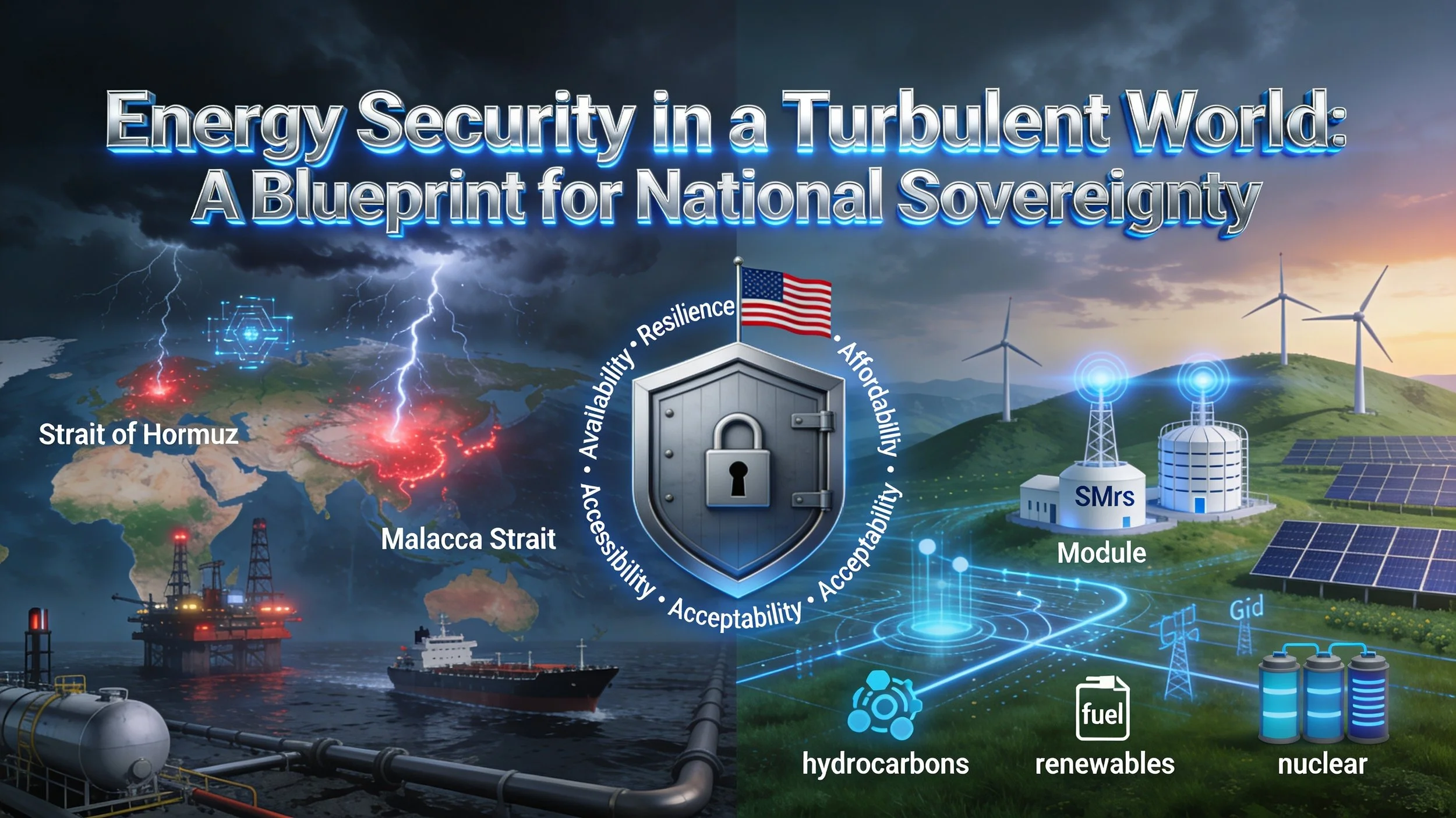
The year 2026 has served as a harsh master, teaching nations that energy is not merely a commodity—it is the lifeblood of geopolitical autonomy. As fuel crises and regional shocks redefine global power dynamics, the definition of energy security has evolved. It is no longer just about keeping the lights on; it is about ensuring a resilient, affordable, and decentralized supply that can withstand both physical blockades and digital warfare.
Defining Energy Security in the Modern Era
Historically, energy security was viewed through the lens of the 4 A's:
Availability: Physical existence of resources.
Affordability: Low price volatility for consumers and industry.
Accessibility: Geographical and infrastructural ease of transport.
Acceptability: Environmental and social sustainability.
In today’s turbulent climate, we must add a fifth: Resilience. This involves hardening grids against cyberattacks and bypassing strategic chokepoints—like the Strait of Hormuz or the Malacca Strait—that can be weaponized in an instant.
The Strategic Anchor: Oil and Gas
Despite the green transition, oil and gas remain the bedrock of heavy industry and global logistics. For independent nations, the goal is not immediate abandonment but strategic management:
LNG as a Flexible Buffer: Liquefied Natural Gas (LNG) allows nations to pivot between suppliers when pipelines are cut, acting as a critical "insurance policy" during demand peaks.
Strategic Petroleum Reserves (SPR): Maintaining 90 days of net imports is no longer a suggestion; it is a survival requirement.
Diversification of Origin: Sovereignty is found in a fragmented supplier list. Dependence on a single geopolitical bloc for fossil fuels is a structural vulnerability.
The Resilience of Renewables
Renewable energy (solar, wind, and green hydrogen) represents the ultimate form of "domesticated" energy. By tapping into local wind currents and sunlight, nations reduce their exposure to the "import bill" and global price spikes.
Decentralization: Unlike massive coal plants, distributed solar and wind farms are harder to disable in a single strike.
The Storage Mandate: To overcome intermittency, national priorities must shift toward Long-Duration Energy Storage (LDES) and utility-scale batteries to ensure 24/7 reliability.
Small Modular Reactors (SMRs): The New Frontier
Small Modular Reactors (SMRs) have emerged as the "black swan" solution for nations lacking vast fossil reserves. Ranging from 50 to 300 MW, these factory-built units offer unique security advantages:
Firm Power: Unlike renewables, SMRs provide a steady "baseload" of zero-emission energy.
Operational Longevity: Many designs require refueling only once every 10 to 20 years, effectively decoupling a nation's power grid from short-term commodity market fluctuations.
Scalability: Their modular nature allows them to be deployed in remote industrial hubs or integrated into existing grids strained by the 2026 shortages.
National Priorities for Independent Nations
To secure a future in a world of "permacrisis," independent states must move beyond rhetoric and implement four concrete pillars:
1. The 2035 Diversification Target
Nations should aim for a "Tri-Fuel" mix: balancing traditional hydrocarbons with a 30–50% split of renewables and nuclear. This prevents "single-point-of-failure" economics.
2. Infrastructure Modernization
Energy security is only as strong as the wires it travels on. Priority must be given to:
Smart Grids: Capable of re-routing power during localized outages.
Subsidized Pilots: Government backing for SMR deployments and hydrogen hubs to de-risk private investment.
3. Regional Power Pools
Isolation is a liability. By joining regional grids—such as the ASEAN Power Grid or European interconnectors—nations can trade surpluses and support neighbors during localized supply shocks, creating a "mutual defense treaty" for energy.
4. Mineral Sovereignty
The transition to SMRs and batteries requires rare earth elements and lithium. National security now dictates:
Recycling Mandates: To reclaim minerals from old tech.
Friend-Shoring: Forming alliances with ideologically aligned mining partners to ensure a steady supply of fuel and components.
Conclusion: Balancing the Mix
The path forward is a hybrid one. Natural gas acts as the necessary bridge, while renewables and SMRs provide the long-term growth and stability required for true sovereignty. As seen in the post-2026 U.S. SMR incentives and Europe’s aggressive nuclear revival, the time for passive energy policy is over. Independent nations must act decisively today to ensure they are not left in the dark tomorrow.