
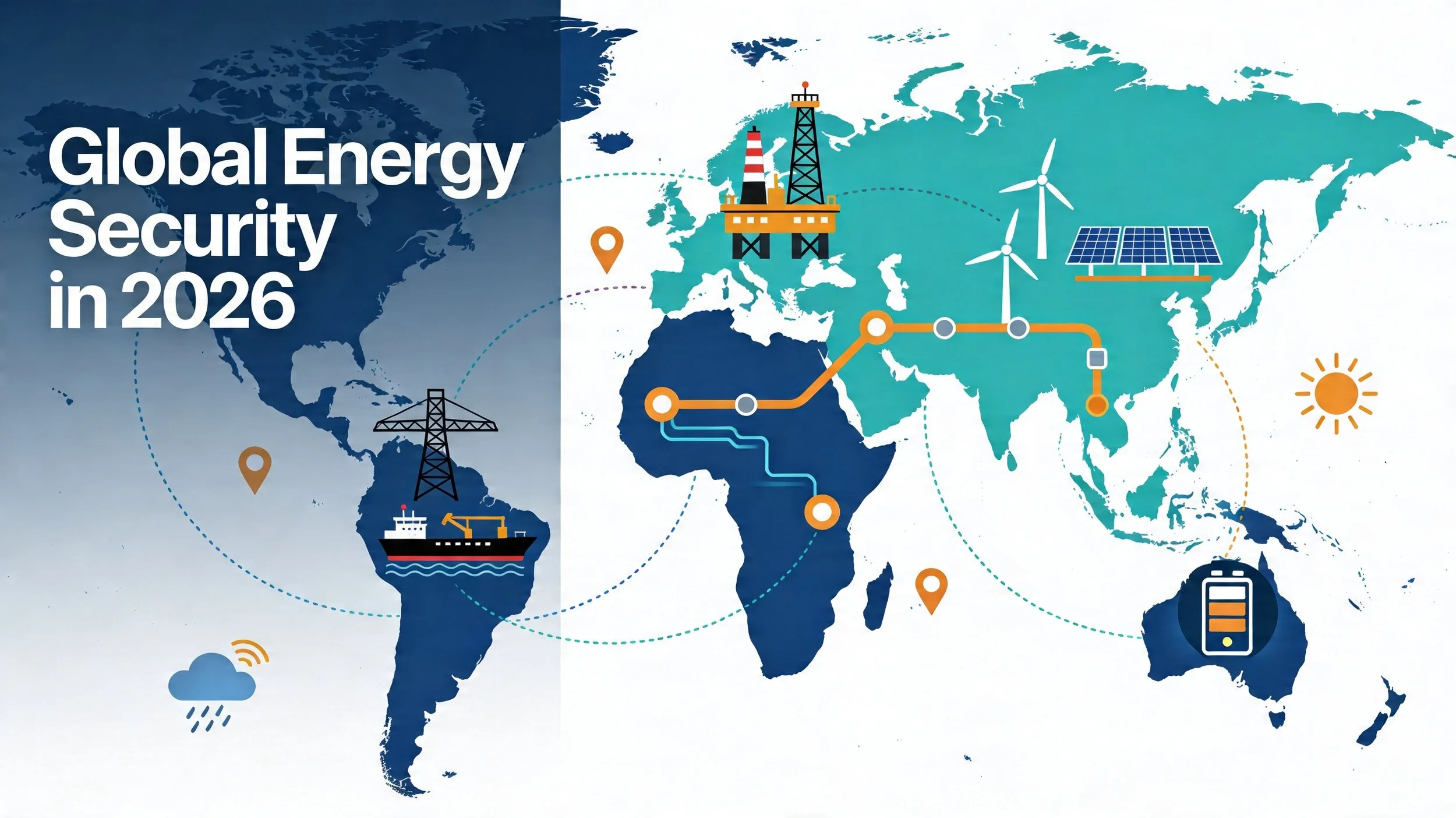
Global energy security in 2026 is shaped by overlapping geopolitical tensions, climate risks and the accelerating shift towards cleaner energy systems. Governments, businesses and investors are asking how to secure reliable, affordable and sustainable energy in a world where disruption has become the norm.
What Global Energy Security in 2026 Really Means
At its core, global energy security in 2026 means uninterrupted access to energy at prices societies can bear, while staying on track with long‑term environmental and social goals. Most analysts describe energy security through three pillars:
Availability: having sufficient energy supply and infrastructure to meet demand.
Affordability: keeping energy costs manageable for households, industry and governments.
Sustainability: reducing emissions and other environmental impacts over time.
Short‑term energy security is about the ability to absorb shocks such as conflict, cyberattacks, supply‑chain disruptions or extreme weather events. Long‑term energy security focuses on planning, diversification and investment in grids, storage and efficiency, so that systems remain resilient as demand grows and technologies evolve.
Why Global Energy Security Is a Priority in 2026
The last few years have demonstrated how vulnerable global energy systems can be. Conflicts and geopolitical tensions have disrupted oil and gas flows, reshaped trade patterns and fuelled price spikes that filter through to inflation and public finances. For many importing countries, global energy security in 2026 is closely tied to economic stability and social cohesion.
Climate‑related extreme weather further tests energy systems. Heatwaves, storms, floods and droughts can damage infrastructure, reduce hydropower output, affect fuel transport and increase peak electricity demand at the same time. In many emerging economies, these stresses sit on top of a more basic challenge: hundreds of millions of people still lack reliable access to electricity and clean cooking, so improving energy security also means expanding access in an affordable and inclusive way.
Fossil Fuels, Clean Energy and New Security Trade‑Offs
In 2026, fossil fuels still supply the majority of global energy, giving major oil and gas exporters significant influence and leaving many importers exposed to price volatility and supply decisions beyond their control. To manage this risk, countries continue to diversify their suppliers, invest in liquefied natural gas (LNG) infrastructure and maintain or expand strategic reserves.
At the same time, the growth of renewable energy is reshaping global energy security. Solar and wind can enhance security by harnessing domestic resources that are more widely distributed and less vulnerable to the kind of geopolitical choke points that affect fuels shipped through a few key routes. However, integrating large shares of variable renewables requires flexible grids, storage, interconnectors and demand‑response tools; without these, intermittency can itself become a source of reliability risk.
Clean‑energy transitions also introduce new dependencies. Technologies such as batteries, electric vehicles and wind turbines rely on minerals like lithium, cobalt and rare earth elements, whose production and processing are highly concentrated in a small number of countries. As a result, global energy security in 2026 is not just about oil and gas; it increasingly depends on resilient, diversified supply chains for critical minerals and clean‑energy components
How Global Energy Security in 2026 Differs by Region
Energy‑exporting and energy‑importing regions experience global energy security in 2026 in different ways. Exporters focus on stable demand, secure transport routes, investment in production capacity and political developments that could restrict access to key markets. Import‑dependent economies, particularly in Europe and Asia, pay closer attention to supplier diversification, storage, infrastructure bottlenecks and the cost of sudden price surges.
Global assessments such as the 2025 energy outlooks highlight that some advanced economies have managed to improve security, sustainability and affordability together by building diversified, flexible energy systems and strong regulatory frameworks. However, progress is uneven, and setbacks are possible if investment slows or extreme events outpace infrastructure upgrades. In many lower‑income countries, affordability and basic access remain the dominant concerns, making subsidies, grid expansion and decentralised solutions key pillars of their energy‑security strategies.
Why Global Energy Security in 2026 Is Business‑Critical
For businesses, global energy security in 2026 is a strategic issue, not just an operational detail. Volatile energy prices can erode margins, distort investment plans and complicate long‑term budgeting. Power outages and fuel shortages can disrupt manufacturing, logistics, data centres and digital services, with knock‑on effects across entire supply chains.
In response, many companies are:
Mapping energy use across facilities and suppliers to identify vulnerabilities.
Investing in energy efficiency and process optimisation to permanently reduce demand.
Exploring on‑site generation (such as rooftop solar), storage and long‑term power purchase agreements to stabilise costs and improve reliability.
These measures strengthen resilience to external shocks while also supporting corporate climate and ESG commitments, which are increasingly important to regulators, investors and customers
Policy and Technology Pathways to Stronger Energy Security
Policymakers and industry have several levers to improve global energy security in 2026 and beyond:
Diversification of supply
Broadening the mix of fuels, technologies and trading partners reduces reliance on any single source and spreads risk across a more resilient portfolio.Energy efficiency and demand‑side flexibility
Reducing waste and enabling flexible consumption (for example, shifting demand away from peak times) can lower total energy needs and ease stress on infrastructure.Infrastructure resilience and cyber security
Upgrading ageing grids and pipelines, investing in storage, improving interconnections and strengthening defenses against cyberattacks are essential as systems become more digital and interconnected.Innovation, investment and clear policy signals
Scaling renewables, storage, flexible generation and smart grids requires long‑term investment supported by predictable regulation, streamlined permitting and stable market rules.
There is no single template that fits every country. Each must weigh short‑term stability against long‑term decarbonisation, local resource endowments and social priorities. What is common across regions is a move towards more diversified, flexible and digitally managed energy systems, in which security, sustainability and equity are treated as interconnected objectives rather than competing agendas.
Key Takeaways on Global Energy Security in 2026
Global energy security in 2026 is a central theme in energy policy, corporate strategy and investment decisions worldwide. As geopolitical dynamics, technology and climate impacts continue to evolve, the definition of what it means to have a “secure” energy system will keep shifting as well.
By focusing on diversification, efficiency, resilient infrastructure and clean‑energy innovation, countries and companies can reduce their exposure to shocks while building energy systems that are more reliable and more sustainable over the long term.